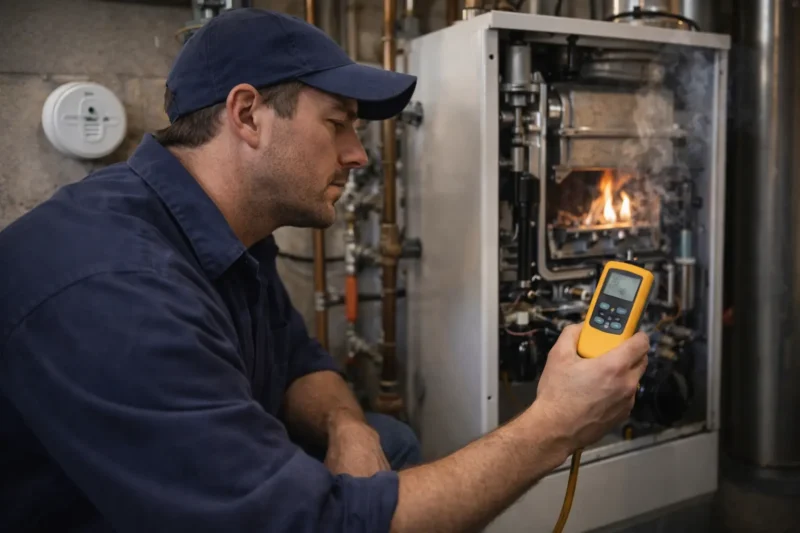
Boilers are generally very safe when properly maintained. But like any appliance that uses fuel and generates heat, they require regular attention to operate safely. The good news is that most safety measures are simple and take just a few minutes.
Carbon monoxide is the most serious risk associated with boilers. This odorless, colorless gas is produced when fuel doesn’t burn completely. A properly tuned and maintained boiler produces very little CO, but a boiler that hasn’t been serviced in years, or that has a cracked heat exchanger, can produce dangerous levels. Every home with a boiler should have at least one carbon monoxide detector — and ideally one on each floor. Check the batteries regularly and replace units older than 7 years.
Make sure the area around your boiler is clear. Boiler rooms are not storage areas. Flammable materials stored near the unit create a fire risk, and clutter can block ventilation openings that the system needs to operate safely. Keep at least two feet of clear space around the boiler.
Have your boiler inspected annually by a licensed technician. This is the single most effective thing you can do for both safety and efficiency. A trained professional will check the flue, inspect the heat exchanger, test safety controls, and identify issues before they become dangerous.
Also learn where your emergency shutoff is located before you need it. Most boilers have a shutoff switch near the unit that looks similar to a light switch. If you ever smell gas, see active flames outside the combustion chamber, or notice extreme pressure readings, shut off the system and call for help.
For more detailed guidance on keeping your boiler running safely, read more from HVAC professionals who work with these systems every day in homes across New Jersey.
